understanding your lymphatic system.
You may remember a detail or two about the circulatory system, but you have likely left your deep knowledge of the lymphatic system in your high school biology classroom. So here is a little refresher on these important body systems and how they work together.
The circulatory system continuously pumps nutrient-rich blood throughout the body to deliver oxygen, water, minerals, hormones and nourishment to your cells and tissues. As the cells use what they need, they naturally leave behind waste, excess fluid and cellular debris. While some fluid returns back into the bloodstream, the remaining waste-filled fluid is collected by lymphatic vessels where it officially becomes lymph. This lymph travels through nodes, which act like filtering and immune checkpoints helping to clean and clear the fluid so it can be safely returned back into blood circulation.
SUMMARY: the cardiovascular system is a full grocery truck heading to a delivery, and the lymphatic system is the garbage and recycling truck that gets rid of all the waste.
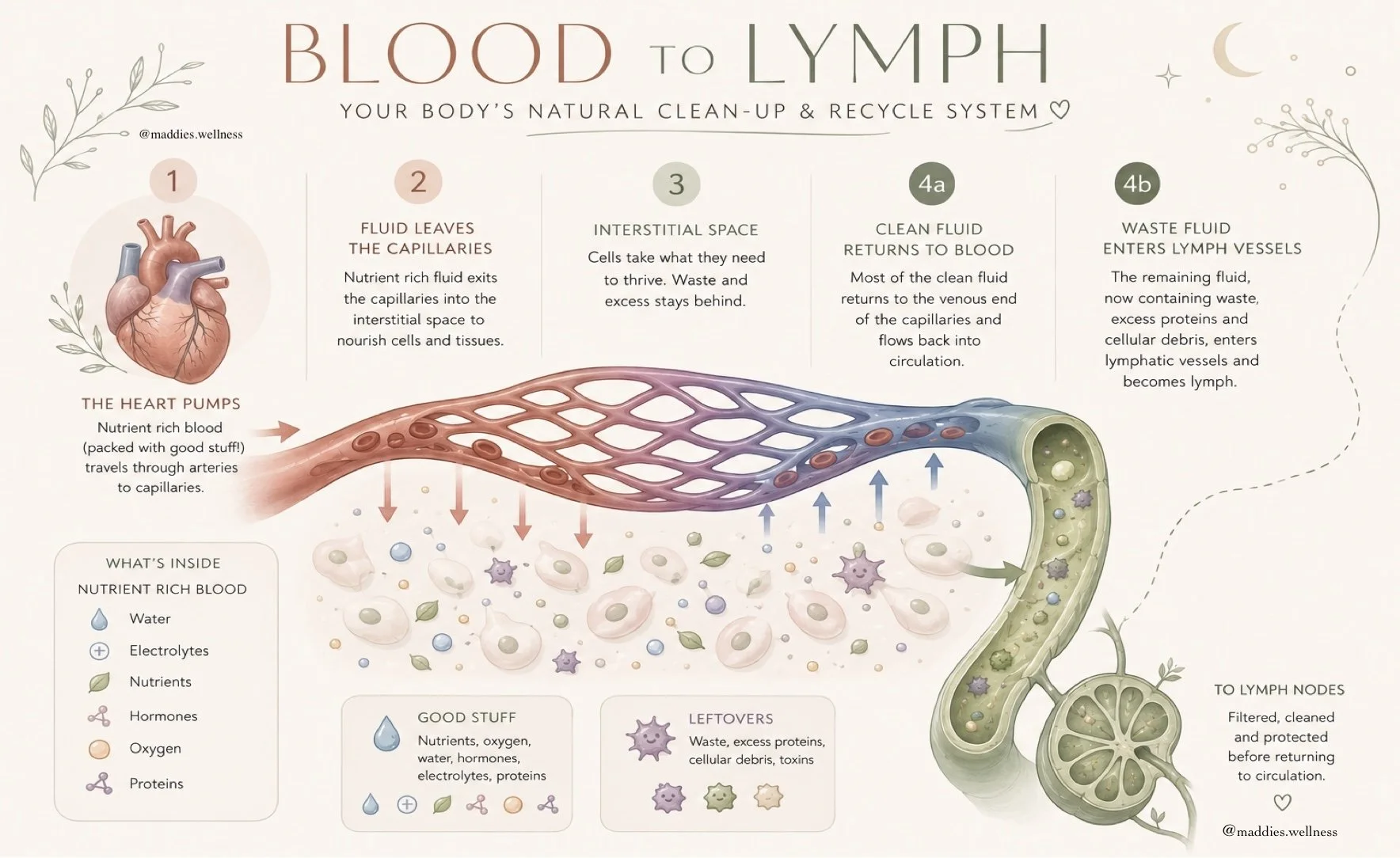
Figure 1.
Unlike your cardiovascular system which is pumped by the heart, the lymphatic system relies on movement and pressure shifts to keep lymph flowing through checkpoints and back into circulation.
We can support smooth moving lymph by:
breathing deeply
contracting our muscles
walking or exercising
true cellular hydration
manual lymphatic drainage (MLD)
good posture
maintain healthy fascia and tissue mobility
SUMMARY: we need to support our lymphatic system daily with movement and hydration.
Daily life can also burden the lymphatic system, and we often see sluggish flow and fluid build up associated with:
stress and shallow breathing
dehydration and low mineral intake
scar tissue or post-surgical adhesions
injury and/or inflammation
chronic infections
poor posture
stagnant lifestyle or sitting for long periods
tight clothing
chronic muscle tension (ex. jaw clenching, tight shoulders, pelvic tension)
prolonged cold exposure (ex. underdressing in winter, excessive intake of cold food or drinks)
alcohol and nicotine use
poor or highly processed diet
SUMMARY: if you have lymphatic stagnation even with movement and hydration, check this list to see if you might need a different lifestyle adjustment.